


There is a distinct psychological privilege that belongs entirely to the detached spectator.
When a brutal, multi-generational conflict erupts on the other side of the planet, the immediate reaction among Western onlookers is rarely humility, historical curiosity, or a quiet acknowledgment of human grief. Instead, it is an immediate scramble for branding. In our digital public square, distant suffering is quickly processed, stripped of its realities, and converted into raw material for a personal moral performance.
This is the core danger of what I call “selective solidarity”. It is an intellectual trick that doesn’t actually seek to understand a crisis, but rather to use it. By flattening one of the most historically intricate, agonizing conflicts of our modern era—the Israel-Palestine conflict—into a cheap binary of pure good versus pure evil, Western activism reveals its true objective.
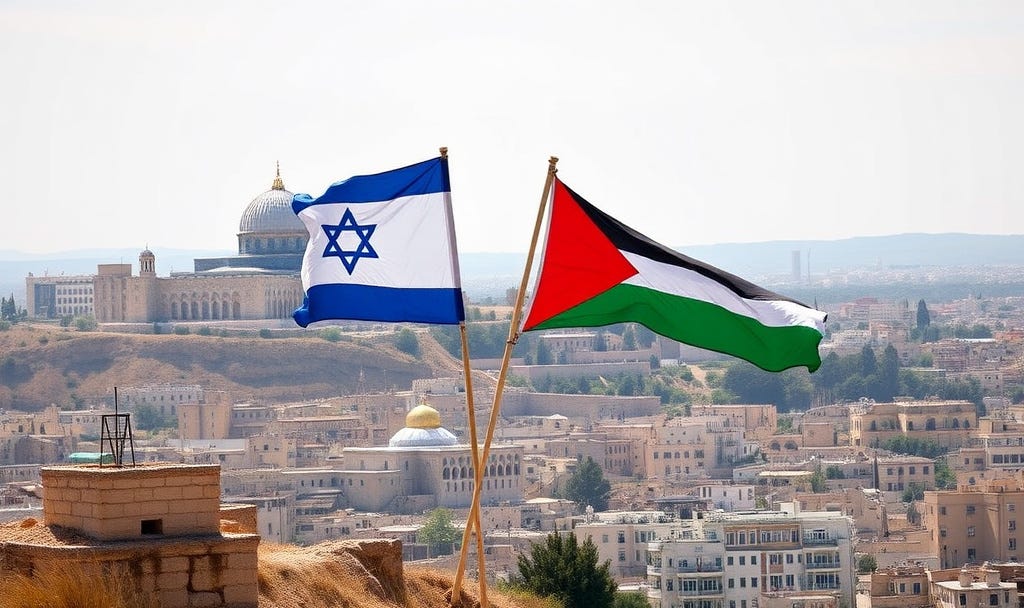
It isn’t about saving lives thousands of miles away; it is about securing moral status right here at home.
To maintain the absolute certainty required by a modern secular crusade, context is treated as an existential threat. The moment you allow historical nuance, competing generational traumas, and messy regional realities into the equation, the clean lines of the narrative begin to blur. And a blurred narrative cannot produce tribal compliance.
To make solidarity weaponizable, the activist network relies on a few deliberate reductions. First, history is treated like an à la carte menu. People pick an arbitrary starting point that perfectly justifies their preconceived bias, systematically erasing decades of complex provocations, geopolitical shifts, and internal leadership failures that came before it. Next, justice is determined entirely by an aesthetic equation—whoever fits the visual profile of the underdog is automatically designated as inherently righteous, while the stronger side is cast as uniquely malevolent. Finally, compassion becomes strictly transactional, deployed with clinical exclusivity. If an act of violence or systemic suffering occurs outside the designated tribal script, it is met with absolute institutional silence. This isn’t solidarity; it is ideological curation.
The real tragedy of this dynamic is that it actively poisons the possibility of actual resolution. When Western universities, corporate boards, and political factions treat a foreign war zone as a theatrical stage to signal their own purity, they export an uncompromising, zero-sum radicalism.
The people actually living within the geographic boundaries of the conflict do not have the luxury of treating their lives as an abstract thought experiment. They face the brutal, uncompromising friction of survival, security, and the daily grind of co-existence. But for the distant activist holding a sign on a comfortable campus, compromise is viewed as heresy. Because they bear absolutely none of the physical or generational consequences of the conflict, they can afford to demand total, unrealistic capitulation. They demand a clean, cinematic ending that satisfies their psychological need for a righteous victory, completely unbothered by the fact that such an ending is a mathematical impossibility in the real world.
When solidarity becomes a performance metric, truth is always the first casualty.
If we genuinely care about the human cost of global conflicts, our first duty is to reject the low-resolution scripts handed to us by ideological gatekeepers. We must find the intellectual stamina to hold competing truths simultaneously. We must be willing to audit the structural failures of power without celebrating the nihilistic violence of extremism. True solidarity does not demand that we pick a side in a curated domestic shouting match; it demands that we have the courage to look past the performance and stand with the messy, difficult, and un-cinematic reality of human truth.
To explore a deeper, uncensored breakdown of the historical realities beneath the media filters—and to understand how modern movements weaponize selective outrage to enforce tribal conformity—pick up Book 2 of The Politics of Protest series: Truth Beyond Activism: A Critical Guide to the Israel-Palestine Conflict and the Dangers of Selective Solidarity.