


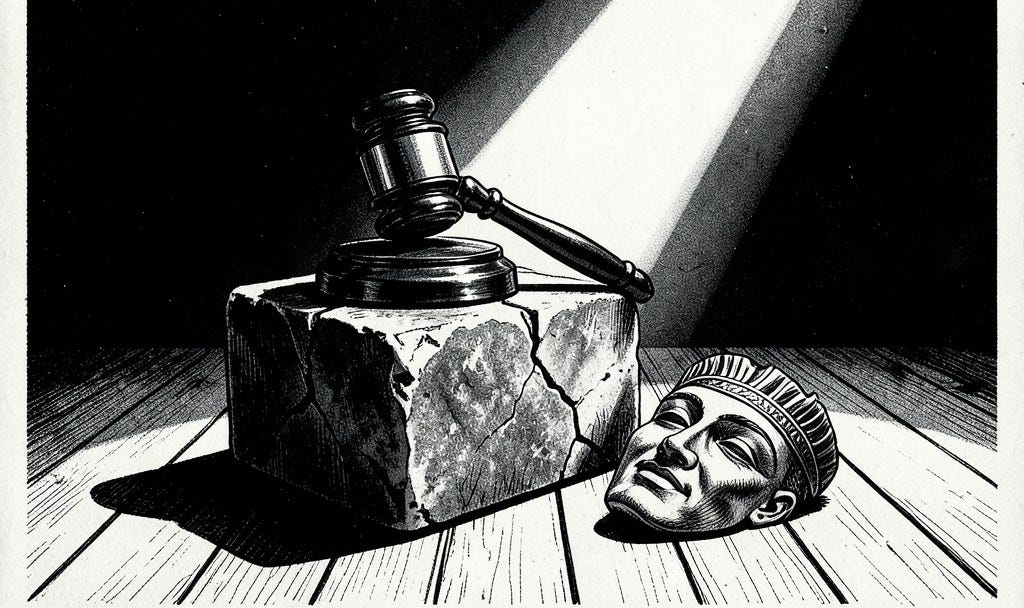
In contemporary diplomacy, there is no currency more valuable than the aesthetic of neutral authority.
When an independent international body issues a finding, the public assumes it represents the culmination of dispassionate inquiry: stable definitions, impartial evidence, and the consistent application of universal norms. This moral prestige is the sole foundation upon which international human rights institutions rest. Without the presumption of objectivity, international law ceases to be law; it becomes diplomacy conducted by bureaucratic fiat.
Few modern figures illustrate the collapse of this neutrality more starkly than Francesca Albanese, the United Nations Special Rapporteur on the occupied Palestinian territories.
Across European progressive salons and municipal assemblies—where she is routinely fêted and presented with the honorary keys to historic Italian cities—she is treated as an untouchable jurist holding rogue power to account. Yet behind the institutional veneer lies an operation that looks less like a judicial investigation and more like an open campaign of political warfare, conducted under the banner of the blue flag.
A Structural Conflict of Interest
The fundamental failure of the mandate begins with its institutional design.
Most UN monitoring mechanisms are tasked with evaluating human rights compliance across all belligerents in a given conflict zone. Albanese’s specific mandate, created in 1993, is deliberately asymmetric: it is mandated solely to investigate Israeli violations, while explicitly excluding abuses, terror campaigns, and authoritarian governance carried out by Palestinian factions such as Hamas and Islamic Jihad.
A legal investigator tasked from day one with finding guilt on only one side is not an arbiter; she is a prosecutor with a pre-written verdict.
When Albanese assumed the post in 2022, United Nations procedural rules explicitly required rapporteurs to demonstrate impartiality and a clean slate regarding the issues under their remit. Yet her public record was already saturated with extreme partisan declarations, including historical statements decrying America as being “subjugated by the Jewish lobby”—a classic, ancient trope dressed up in contemporary academic jargon.
Rather than disqualifying her, these ideological commitments functioned as a credential. The appointment revealed an open secret within the UN Human Rights Council: ideological zeal is not considered an impediment to the office, but the primary prerequisite for holding it.
The Erasure of Legal Symmetry
International humanitarian law was designed to protect civilians by establishing clear rules of engagement for all combatants. It operates on reciprocity: combatants must wear uniforms, distinguish themselves from non-combatants, refrain from weaponising civilian facilities, and bear responsibility for atrocities they commit.
Albanese’s contribution to international discourse has been the systematic dismantling of this symmetry.
Following the massacres of 7 October, her immediate public intervention was not an uncompromising condemnation of civilian slaughter, hostage-taking, and sexual violence, but an immediate attempt to rationalise the carnage as an inevitable reaction to oppression. When Israeli civil society faced an unprecedented barrage of unguided rockets, she repeatedly advanced the novel legal argument that a sovereign nation possesses no right of self-defence under international law against non-state actors launching armed assaults from territory beyond its borders.
This is not legal interpretation; it is lawfare designed to achieve a political objective. By granting militant factions complete moral immunity while simultaneously declaring that a sovereign democracy cannot legally defend its citizens from cross-border liquidation, she inverts the entire purpose of the laws of war.
Terror is rebranded as ‘resistance’, and basic national defence is redefined as a war crime.
The Municipal Spectacle: Honoring the Echo Chamber
The elevation of Albanese across European civic spaces—from municipal councils to academic halls—highlights a broader civilisational retreat.
When Italian mayors and municipal councils award honorary citizenships and city keys to an official whose statements have drawn official condemnation from the governments of France, Germany, and the United States, they are not defending human rights. They are engaging in pure local virtue-signalling.
It is safe, low-stakes moral vanity. Honoring an international bureaucrat allows local politicians to signal unyielding progressive purity to their domestic base without having to reckon with the messy, difficult geopolitical reality of funding and enabling religious extremism in the Levant. They celebrate the lawyerly costume because looking beneath the gown would expose an ideological crusade they lack the courage to defend.
The Death of Universal Standards
The tragedy of Francesca Albanese is not simply the record of an individual ideologue. It is what her tenure reveals about the irreversible capture of international institutions.
When the world’s primary human rights body allows its official platforms to be weaponised by figures who systematically dismiss terror, invoke archaic ethnic conspiracies, and strip sovereign democracies of their basic right to exist, the entire architecture of global law loses its authority.
Human rights cease to be a universal shield protecting the innocent. They become just another political lever in the hands of the conformity complex—used to punish civilised nations that fight to survive, whilst granting absolute alibis to the barbarians at the gate.
(If you found this audit valuable, subscribe to receive regular essays directly to your inbox. For a deep dive into the selective solidarity and bad-faith traps surrounding current geopolitics, read Truth Beyond Activism and The Good Goliath.)