


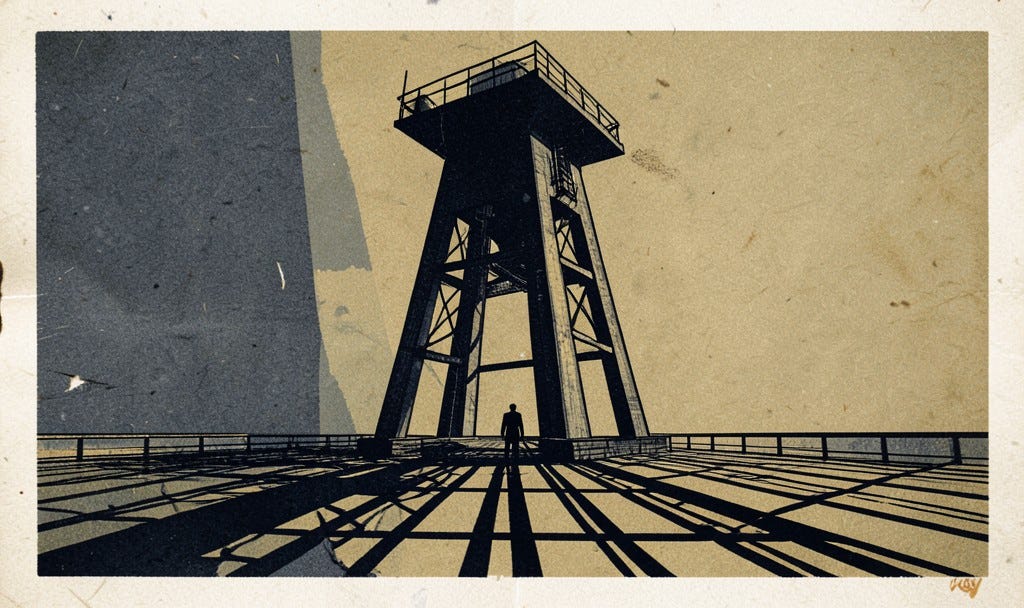
The most effective traps never look like cages. They look like public service announcements.
Right now, an undeniable consensus has settled across modern culture: social media is chewing up our kids. The data is clear, parents are legitimately exhausted, and the impulse to step in and fix it is completely understandable. But it’s precisely when everyone agrees on a moral imperative that we should pay the closest attention to what kind of machinery is being wheeled in through the back door.
Whenever a society panics on behalf of its children, people will willingly hand over the keys to almost anything.
We’re watching this happen in real time with the push for mandatory age verification online. On paper, it sounds harmless: keep minors off algorithmic feeds. But the digital architecture required to enforce that doesn’t just check minors. You cannot structurally verify the age of an under-sixteen without demanding the identity of everyone.
That means facial scans, government IDs, and centralized third-party ledgers just to log into the public square. The moment that happens, anonymity dies. And anonymity has always been the only real armor an ordinary citizen has against institutional overreach.
The narrative forces a cheap, emotional binary: either you hand over your digital biometric fingerprints to the state and private contractors, or you simply “don’t care about child safety.” But we know how bureaucratic infrastructure works. Once a government builds the technical framework to verify and green-light who is permitted to speak, that system is never dismantled. It just quietly expands to monitor what is being said.
We are cheering for the construction of a turnkey digital panopticon simply because we find the paint job comforting.
When the machinery of modern tracking becomes ubiquitous, theoretical arguments about privacy start to feel hollow. At some point, you realize that the real friction isn’t just about debating the rules—it’s about what happens when someone decides to stop playing the game entirely. That tension is what pushed me away from pure cultural theory and into the narrative of ØFF GR1D—exploring what survival actually demands when you try to pull your existence off the ledger before the door locks behind you.
If we keep signing off on the architecture of control in the name of comfort, we shouldn’t be surprised when we wake up inside a cage we actively asked for.