


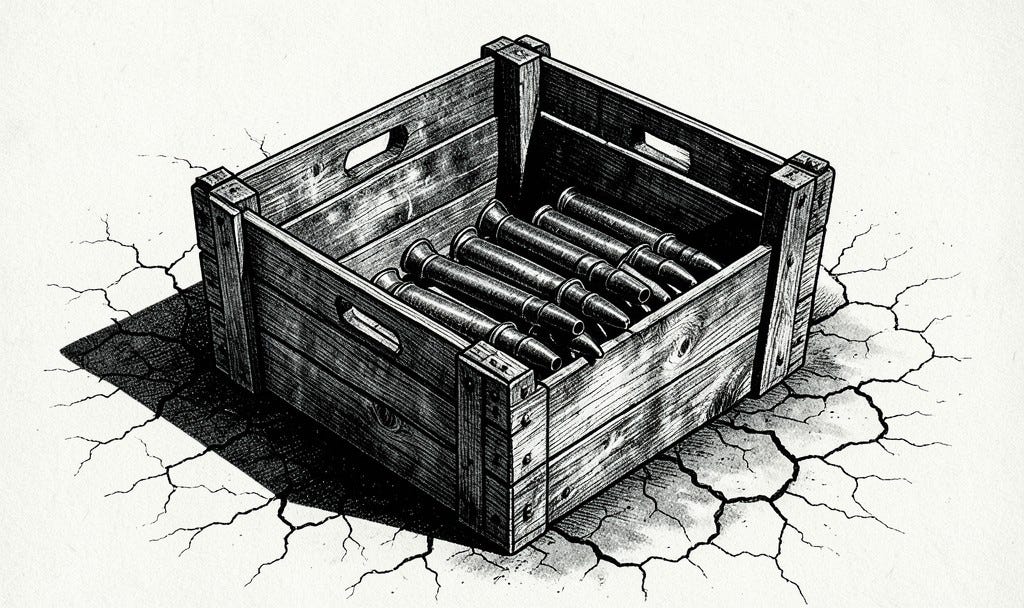
The most sacred cow in international diplomacy is humanitarian aid.
Whenever a protracted conflict breaks out, the political class and global institutions retreat to a familiar refrain: civilian populations must be shielded, supply corridors opened, and hundreds of millions of dollars allocated through multinational NGOs and United Nations agencies. To question the volume, distribution, or mechanics of this aid is to invite immediate condemnation as callous, cruel, or indifferent to human suffering.
Yet across the globe the pattern remains stubbornly consistent: decades of relentless international funding coincide not with de-escalation, but with the institutionalisation of permanent conflict.
Humanitarian aid in contested regions is rarely a neutral lifeline. Under the current operating model, it functions as an external operating subsidy for militant regimes.
The Moral Hazard of Outsourced Governance
To understand how aid sustains war, consider the basic economics of governing a territory.
Any sovereign authority faces concrete material constraints. A ruling faction must pave roads, operate water treatment plants, run hospitals, manage waste, and maintain civil food supplies. Every dollar or ton of concrete allocated to civilian infrastructure is a resource that cannot be spent on artillery, ballistic rockets, subterranean fortifications, or military patronage.
International aid removes this civic friction.
By stepping in to fund, build, and staff essential public infrastructure, Western donors and UN bodies effectively lift the financial burden of civilian survival off the shoulders of local rulers. This creates an extreme moral hazard; the international community absorbs the liability of basic governance (food, healthcare, primary education) and the governing militia diverts 100% of internal revenues, taxes, and raw construction materials toward weapons, offensive tunnel networks, and ideological warfare.
Instead of facing civilian pressure to fix water pipes or generate electricity, the militant regime is entirely free to prioritise continuous conflict. International benevolence becomes their primary balance-sheet cushion.
The Capture Economy
The second failure of the aid model is the myth of neutral distribution.
Aid agencies operate at the mercy of the armed men holding sovereign or de facto power on the ground. To keep operations open and staff safe, international bodies routinely negotiate terms that compromise their core mission:
Hostile regimes regularly divert incoming food convoys, commandeer warehouses, and sell donated provisions on the open market at inflated rates to finance their military payroll.
Local chapters of international agencies are staffed by residents vetted by, related to, or directly embedded within the governing militia.
Foreign funds flow through government-controlled exchange rates or state-favoured transport cartels, skimming millions off every logistical shipment before a single grain sack reaches a hungry family.
The very apparatus built to alleviate civilian hardship ends up funding the logistical apparatus of the armed groups causing that hardship.
Institutionalising the Crisis
Normal refugee frameworks, such as the UN High Commissioner for Refugees (UNHCR), operate with a singular, clear objective: resettle, integrate, and end displaced status as swiftly as possible so people can rebuild sovereign lives.
When aid bodies abandon integration in favour of hereditary victim status—most visibly with agencies like UNRWA—the institutional incentives invert.
An aid agency with a multi-billion-dollar budget, tens of thousands of local employees, and massive political leverage has no bureaucratic incentive to solve the crisis it manages. Resolution would mean organisational dissolution. The agency’s institutional survival requires the permanent maintenance of a dependent, aggrieved, and stateless population.
Generations of civilians are locked into sprawling, dense encampments, barred from integrating into surrounding host countries, and fed an ideological diet that promises return only through total victory over their neighbour.
This is not humanitarian relief. It is the subsidisation of an open-ended ideological siege.
Ending the Blank Check
The instinct to help people caught in crossfire is honourable. The refusal to examine the structural consequences of that help is cowardice.
When foreign aid frees militant rulers from the burdens of civilian governance, finances their operating costs through systemic diversion, and funds organisations that keep populations permanently displaced, it does not alleviate suffering. It guarantees that the next generation will inherit the exact same war.
Peace requires accountability. Until donor nations demand strict operational transparency, verify end-use logistics, and cut off factions that monetise misery, international aid will remain what it is today: the primary underwriter of endless war.
(If you found this audit valuable, subscribe to receive essays directly to your inbox. Explore the full catalogue of books dismantling activist myths and institutional capture under the Books tab on the site.)